
How Much Does It Cost to Put a Vending Machine in an NYC Office or Building? (2026 Guide)
How much does a vending machine cost an NYC office, building, or warehouse in 2026? Real numbers, plus why placement is usually $0 to the host.
Vivian C.
4 min read
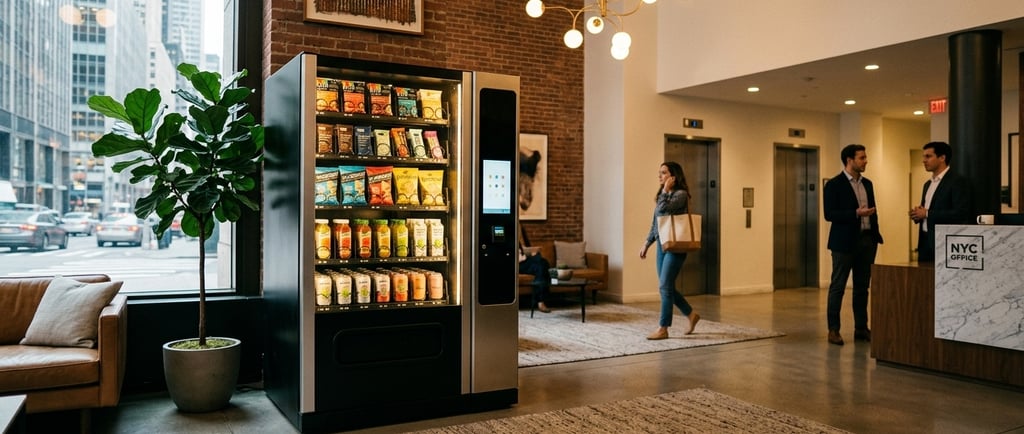
If you manage an office, residential building, gym, or warehouse in New York City and you've been quoted thousands of dollars for a vending machine, you've been talking to the wrong people. In 2026, the typical cost to a host location for placing a vending machine in NYC is zero dollars.
This guide breaks down exactly what "vending machine cost" means in NYC today — for hosts, for operators, and for buildings comparing options. It's written from the perspective of a Queens-based vending and micro market operator who places machines across all five boroughs.
Quick answer: what does a vending machine cost in NYC?
For the host (the business or building where the machine is placed):
Placement: $0 with a vending operator like Lumi Vending
Electricity: roughly $10 to $30 per month per machine on your existing power
Space: about 3 to 6 square feet for a standard combo unit
Time: zero — the operator handles stocking, repairs, and product returns
Equipment, installation, restocking, repairs, software, payment processing, and ongoing service are all covered by the operator — at no cost to the host. The operator's investment is recovered through product sales over time, which is what allows the no-cost-to-host model to work.
The four ways NYC hosts "pay" for vending
1. Electricity
A modern refrigerated vending machine in NYC draws roughly 7 to 10 kWh per day. At Con Edison commercial rates (around $0.27 to $0.32 per kWh in 2026), that comes out to about $60 to $90 per month per machine. Energy-efficient LED-lit machines with smart compressors run closer to $15 to $30 per month. Most Lumi placements use Energy Star-rated equipment.
2. Floor space
A standard snack-and-drink combo machine takes about 39 inches wide by 36 inches deep — roughly 10 square feet of footprint. A micro market with open shelving, two coolers, and a kiosk typically needs 80 to 150 square feet. For most NYC buildings, this is space that was already a corner, hallway, or breakroom dead zone.
3. Building approvals (in some buildings)
Co-ops, condos, and Class A office buildings may require board or property manager approval before a machine is installed. This is usually a one-page request that covers placement, electrical, and removal terms. There's no cost to the host, but it adds 1 to 3 weeks to setup time.
4. Opportunity cost of not having one
This is the cost most NYC buildings don't think about. If your team is leaving the building for $4 coffees and $12 lunches twice a day, you're losing roughly 30 to 45 minutes of productivity per person per day. For a 100-person office, that's the equivalent of 4 to 6 full-time employees a year, gone to deli runs.
What does a vending machine cost in different NYC settings?
New York is one of the densest, highest-foot-traffic markets in the country. A 100-person office in Manhattan generates more daily transactions than a 250-person office in most other U.S. cities. That density is what makes the free-placement model sustainable for operators.
A well-stocked machine in a 100-person NYC office sees steady daily use across breaks and lunch — enough recurring volume for the operator to cover product cost, restocking, equipment, financing, and processing while still keeping placement free for the host. The reason the math works isn't a single big number; it's the steady, predictable use that comes from being well-placed.
Why "free vending" works in NYC
What about micro markets? Are those free too?
Yes — micro markets follow the same model. The host provides space and electricity; the operator provides shelving, smart coolers, a self-checkout kiosk, and stocks everything. The threshold for a micro market in NYC is usually 75 to 100 daily users or more. Below that, a traditional machine or hybrid setup makes more sense for both sides.
Micro markets require significantly more equipment, software, and ongoing service investment from the operator than a single machine, but the steady transaction volume at well-placed locations is what makes the no-cost-to-host model work for both setups.
Hidden costs to watch for when comparing operators
What to ask any vending operator in NYC before signing
Is the placement truly $0, or are there "installation fees" or "service fees"?
Who pays for repairs and machine downtime?
What happens if products don't sell — do you swap them out at no cost?
Are you licensed and insured to operate in NYC?
What's the term of the agreement, and how do I get out of it?
Do you handle DOHMH compliance for any prepared food items?
Reputable NYC operators answer all six with clear, written terms. If any of these answers come back vague, keep looking.
Frequently asked questions
Is there any cost to get a vending machine in my NYC building?
For host locations working with a placement-model operator like Lumi Vending, yes. The operator covers equipment, installation, stocking, repairs, and product returns. The host provides space and electricity.
How long does it take to install a vending machine in NYC?
From signed agreement to a stocked, operating machine, typical timeline is 7 to 21 days. Buildings that require board or property management approval add 1 to 3 weeks. Custom micro markets with renovation coordination take 30 to 60 days.
What's included in the placement at no cost to me?
Everything operational: the machine or micro market equipment, installation, ongoing stocking, product variety adjustments, repairs, software, payment processing, and customer support for your team. The host provides the space and standard electricity. No setup fees, no service fees, no monthly minimums.
What if my building already has a vending machine?
Existing machines aren't necessarily a problem. Many NYC locations have a soda-only machine from a beverage distributor and add a snack or micro market alongside it. The two work together rather than competing.
Can I customize what's in the machine?
Yes. Product mix is set during onboarding and adjusted monthly based on what sells. Kosher, halal, healthy-only, allergen-conscious, and bilingual labeling are all standard options in NYC.
Cost ranges in this guide reflect NYC market conditions in 2026 and cover equipment, electricity, and placement economics. Pricing may shift with inflation, supply chain costs, energy rates (Con Edison adjusts commercial rates periodically), and local market changes. Specific quotes for your location may differ. Lumi Vending updates this guide periodically.
Thinking about adding vending or a micro market to your NYC location? Lumi Vending places customized machines and micro markets in offices, warehouses, residential buildings, gyms, and nonprofits across all five boroughs — at no cost to the host. Request a 5-minute walkthrough.
© 2026 LUMI VENDING
Lumi Vending — Where Convenience Meets Choice.
Based in Queens. Serving all of NYC.